The Outer Banks earns its reputation. Miles of open beach, real surf, a vacation machine that’s been running smoothly for generations: it’s a great trip. But a lot of DC-area travelers do it once and come back with the same two notes: the drive took longer than expected, and the place was more crowded than they’d pictured. They ask around afterward for something different, and the answer that keeps turning up is Virginia’s Northern Neck, along the Potomac, down toward the Chesapeake Bay, under three hours from DC with no Bay Bridge and no tunnel.
But the drive difference isn’t the real story. The Outer Banks and the Northern Neck are different categories of waterfront weekend, and the comparison between them isn’t a ranking exercise. It’s a question about what kind of water you want.
Two different kinds of water
The Outer Banks is open Atlantic. The waves come in from thousands of miles of open ocean, the rip currents are real and signposted, the beach stretches wide and bright and windy. It’s a great version of that thing. It delivers on the surf and the sand and the wide horizon in a way that’s hard to argue with.
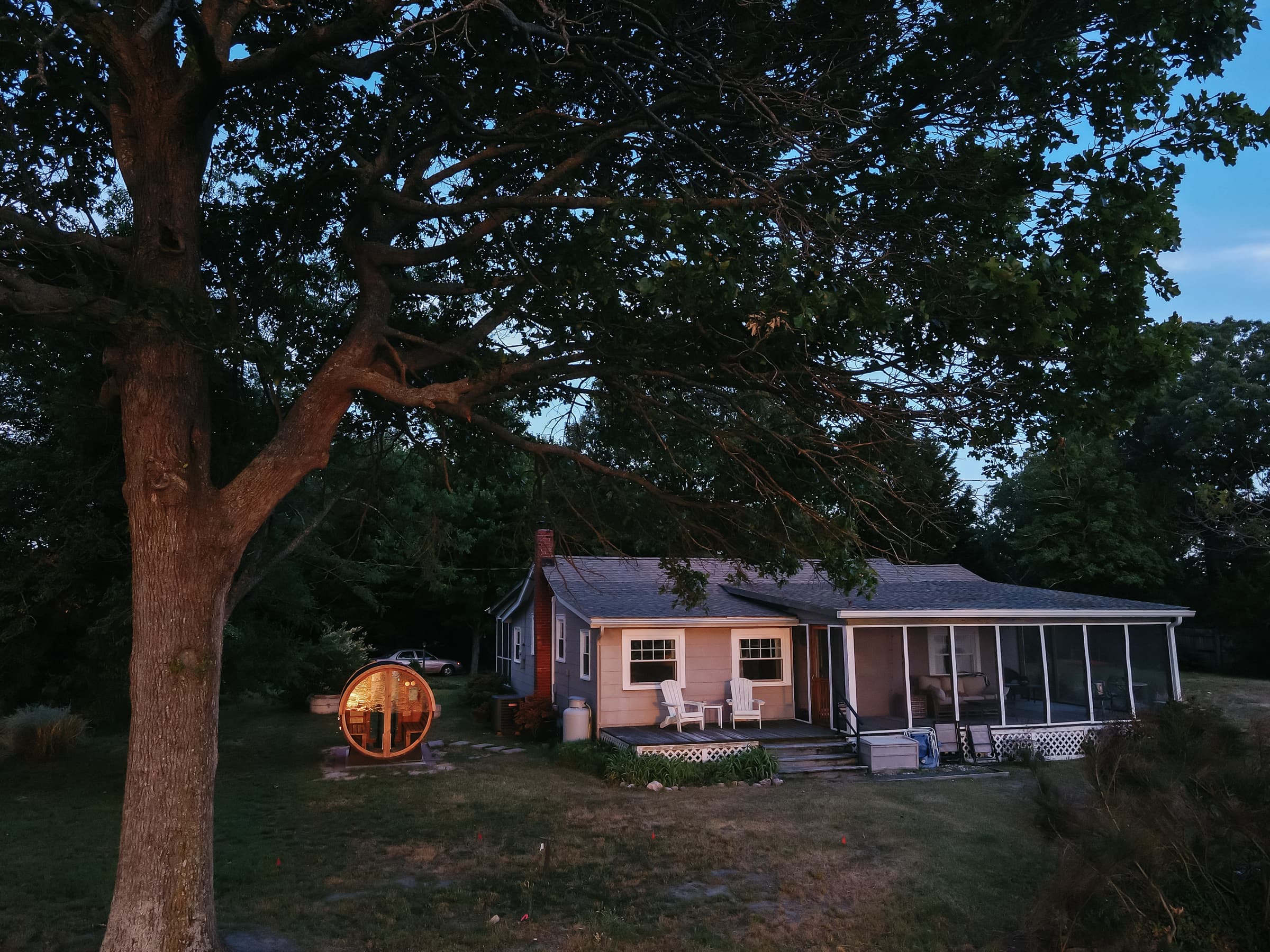
Hull Creek on Virginia’s Northern Neck is a tidal creek fed by the Potomac, sheltered on both sides, shallow enough in spots to wade across. The water is warm in summer, calm on most days, and sits just below the back porch at Captain’s Cottage. There’s no surf, no rip current, no designated swimming zone. You wade in straight from the shore, easy and unhurried, no wave to time.
These aren’t better or worse. They’re different responses to the question “I want to be near the water this weekend.”
The drive and what it means
From DC to the Outer Banks is approximately a five-hour trip on a good day, and considerably more on a summer Friday with the kind of traffic that turns a road trip into a logistics problem. From DC to the Northern Neck is two hours and forty-five minutes: south on 95, east on Route 3 through King George County and across the Harry W. Nice Bridge into the Neck, and you’re pulling onto the gravel before the afternoon is over.
That time difference compounds across a three-night weekend, and it compounds faster with kids in the car. A five-hour drive turns a Friday into a wash, and a car seat and a tired toddler make it worse. Under three hours from DC means leaving after work on Thursday and still catching sunset over the water, a glass of wine in hand, before anyone’s asking when they’ll get there.
What happens without the crowd
The Outer Banks is built to handle millions of summer visitors. The rental streets, the restaurant rows, the lifeguard stations, the gear shops: there’s a machine that runs the OBX summer vacation and it works efficiently. That’s a feature if you want a built-in program. It becomes a cost if you don’t.
The Northern Neck doesn’t have that machine. Reedville, the nearest town, has a Victorian main street, a functioning menhaden plant, and a fishermen’s museum that closes in the afternoon. Kilmarnock has a few restaurants worth finding. The weekend has no built-in structure. You make it yourself, which tends to mean you end up with the weekend you actually wanted rather than the one you were handed.
Who each one is for
If you want surf, a wide beach, and a vacation destination that has been doing its job professionally for decades, the Outer Banks does that exceptionally well.
If you want still water, a private dock, a sauna, and a hot tub that looks straight out over the creek, and is perfect for stargazing at night, all under three hours from DC with no Bay Bridge traffic and no planned itinerary: Captain’s Cottage on Virginia’s Northern Neck is the kind of weekend you’ve been looking for.
The Northern Neck is a different category of weekend entirely. When you’re ready to try it, check availability and book your stay.