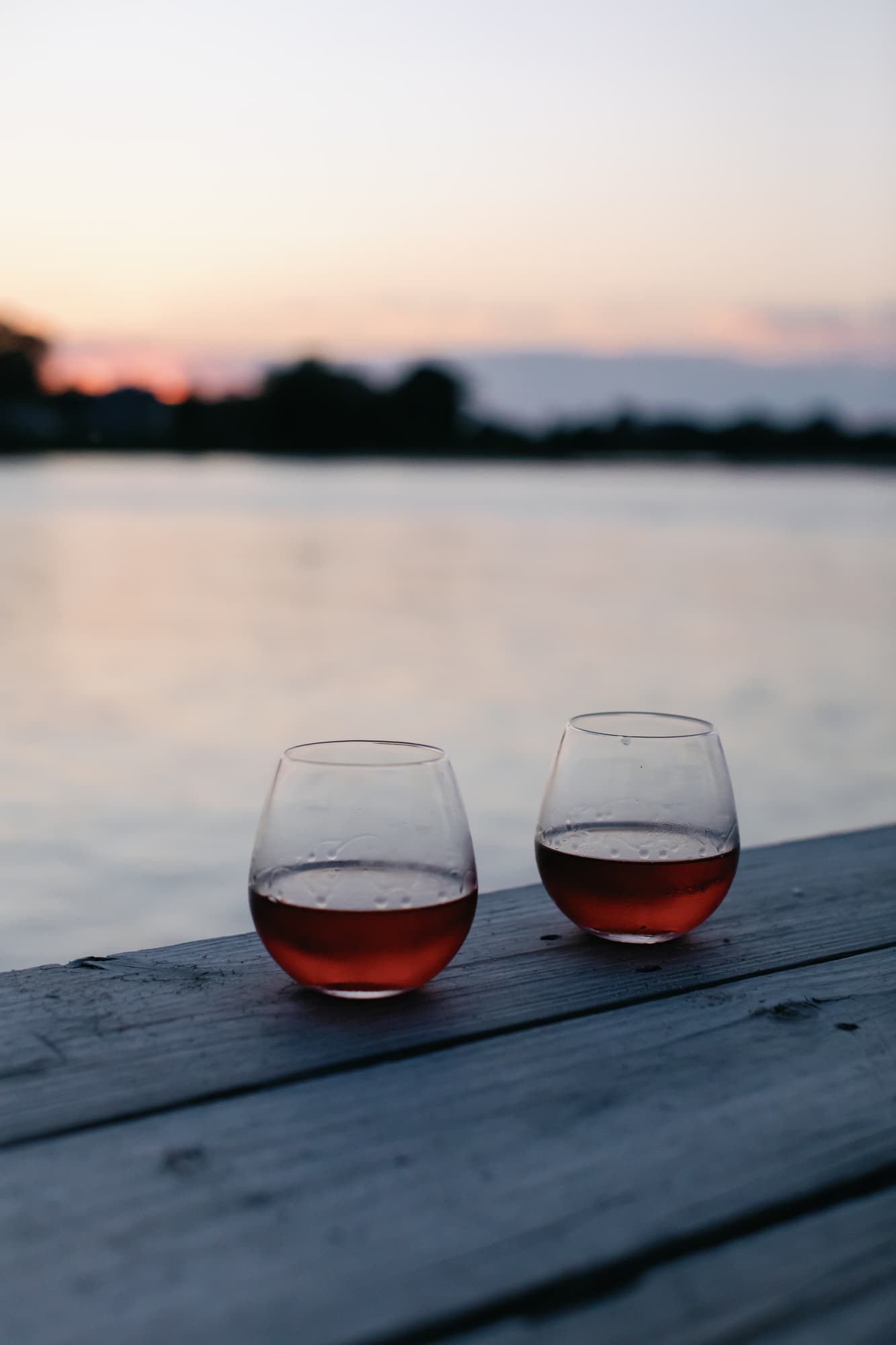
People arrive at the cottage with a plan to relax, and the plan is usually the problem. They have a list. Sunrise crabbing, then the sauna, then a drive to Reedville, then sunset on the dock with a specific bottle of wine. It is a beautiful list. It is also just work wearing a vacation costume, and after a few years of trips to our home on Hull Creek, I can tell you almost no one’s best weekend here was the one they scheduled.
The slow weekend is a skill, not a setting. Nobody disconnects by accident anymore. The phone is engineered against it. So this is the closest thing I have to a method, learned through some trial and error (and error and error).
Decide the trip is already good
Actually, start earlier than the first hour. The drive down counts. The vacation doesn’t begin when you pull into the gravel. It began when you backed out of your driveway. Once you decide that, the whole trip opens up: you stop too many times, you play the music loud, you ask one good question and let the answer take an hour. There’s no work before the fun. It’s all the fun.
Then you pull in, and the first hour is where most weekends are won or lost. You walk in, you scan the place, and some quiet part of your brain starts auditing: is this worth it, are we doing it right, should we have left earlier. That audit never closes on its own. You have to close it deliberately. Stand on the screened porch, look at the water, and decide, out loud if it helps, that the trip is already a success and nothing else has to be earned. Everything after that is surplus.
It sounds soft. It is the single highest-leverage thing you will do all weekend.
Let the tide hold the schedule
A digital detox weekend fails when you replace the phone with nothing. The mind wants a rhythm; if you don’t give it one, it reaches for the screen out of sheer structural hunger. So hand the job to something slower than you are. Here, that is the tide and the light.
The creek runs shallow and brackish, and it changes character through the day: flat and glassy at dawn, working and bright by noon, gold and going quiet by seven. You do not need a tide chart and an itinerary. You need to notice which one is happening and do the obvious thing. Morning water is for the kayaks. Midday heat is for the hammock and a book you will not finish. Evening is for the dock and not talking much. The schedule was there the whole time. It just isn’t on your calendar.
The two-hour rule for the phone
I don’t believe in dramatic phone bans. People white-knuckle them for a day and then binge. What works, almost every time, is the opposite of a ban: a small, boring agreement. The phone gets two windows a day, say with morning coffee and again after dinner, and lives face-down on the kitchen counter the rest of the time. Not in a pocket. On the counter. The friction of having to walk to it is enough; most of the reaching is reflex, and reflexes lose to a short walk.
The cottage has fast Wi-Fi and a real desk in the master bedroom, and I keep both because some guests genuinely need a workday in the middle of a trip. But the fastest internet on the Northern Neck is worth the most when you mostly choose not to use it. Capacity you decline is its own kind of luxury.
Fill the day with things that push back a little
Screens are frictionless, and that is exactly why they win. The antidote is not a ban. It is filling the day with things that have a little resistance built in. Physical things with a beginning, a middle, and an actual end.
Paddle the kayak up the creek and back. It takes the better part of an hour, you arrive damp and slightly tired, and the part of your brain that was running background tabs about work goes quiet because it had to manage a boat. The sauna does the same thing differently: heat until you mean it, then the cold of the creek off the end of the dock, then sit on the screened porch and try to feel bad about anything. It is hard.
Cook one real meal. Not a heroic one. Something that takes an hour of chopping and standing around the kitchen with other people while the light goes long on the water. Cooking together at a vacation house is underrated. It is slow, it involves your hands, and it produces something. None of that is content. A slow weekend is mostly made of things that would be boring to photograph and excellent to live.
Expect the dip
Around the second afternoon, a lot of people hit a strange flat patch. The to-do list is done, the novelty has worn off, and there is a faint itch that feels like boredom but is actually withdrawal. This is the part guests apologize for, as if the cottage has failed them. It hasn’t. The dip is the detox working. If you can sit in it for an hour without reaching for a screen to paper over it, what comes next is the thing you actually drove all this way for: a slowed-down, slightly stunned attention that notices the osprey, the change in the wind, the fact that no one has asked you anything in a while.
Almost no one remembers the itinerary. They remember the afternoon nothing was planned and it turned out to be the best one.
Take the rhythm home
The quiet trick is that most of it is portable. You cannot keep the creek, but you can keep the structure: decide the trip is already good, let something slower than you set the pace, put the phone on the counter. The two-hour rule tends to survive the drive home. So does the habit of cooking together, and the reminder that a full afternoon with nothing scheduled is not wasted.
When you’re ready to try it, stay with us here on Hull Creek: three bedrooms, two screened porches, a dock, and a sauna with a west window onto the water. Bring the list if you must. You probably won’t get to it, and that will be the best part.